
The Hidden Cost of Delaying Bookkeeping Cleanup
Messy books rarely feel urgent at first. A few uncategorized expenses, a stack of receipts, or one unreconciled bank account don't seem like a major problem. Business continues, customers pay, and daily operations move forward.
The trouble is that small bookkeeping issues compound over time. By the time tax season arrives or cash flow becomes tight, simple questions require hours of research instead of minutes. The longer cleanup is delayed, the greater the cost—in time, money, and missed opportunities.

Delayed cleanup makes simple questions harder to answer
Accurate bookkeeping should provide quick, reliable answers to everyday business questions. When records are outdated, business owners often find themselves searching through bank statements, receipts, emails, and notes—only to end up with an estimate instead of a confident answer.
Clean books should help answer questions like:
How much cash is available after upcoming bills?
Which customers still owe money?
Which expenses are rising?
Is the business profitable this month?
Are tax payments on track?
That uncertainty has a cost. A business may hold off on hiring, delay inventory purchases, or approve spending without knowing whether cash can support it. Unclear books create unclear decisions.
Errors multiply when records sit too long
As time passes, bookkeeping becomes harder to reconstruct because details fade. A charge from last week may be easy to identify, but a charge from eight months ago often requires reviewing statements, invoices, emails, and receipts to determine what actually happened.
Every unanswered question adds time to the cleanup process and increases the likelihood of errors.
Common problems include:
Bank accounts that do not match accounting records
Duplicate expenses
Missing receipts
Payments applied to the wrong customer
Old invoices still showing as unpaid
Personal expenses mixed with business expenses
Each issue may look small on its own. Together, they can distort the financial picture. Profit may look higher or lower than it really is. Accounts receivable may look healthy when unpaid balances are actually old. Expense categories may hide trends that need attention.

Tax season gets more stressful and more expensive
Accurate tax returns begin with accurate bookkeeping. When the books fall behind, tax season becomes a race to categorize transactions, reconcile accounts, and explain months of activity.
That rush can lead to problems:
Higher preparation costs because more cleanup is needed
Missed deductions due to missing records
Filing delays
Cash flow surprises from tax balances
More back-and-forth with tax professionals
Clean books do not guarantee a lower tax bill. They do make it easier to file accurately, plan ahead, and avoid last-minute surprises. For many small businesses, that's where the true cost of delayed cleanup becomes clear—in additional time, higher preparation costs, and unnecessary stress.
Cash flow problems can hide in messy books
A business can be profitable on paper and still struggle with cash. Delayed bookkeeping makes that harder to see.
For example, sales may look strong while unpaid invoices continue to build. At the same time, rising expenses, loan payments, subscriptions, or merchant fees can slowly reduce available cash without being immediately obvious.
Clean books help reveal patterns early. Messy books let those patterns stay hidden until the bank balance forces a reaction.
Delayed cleanup
Cash decisions rely on bank balance, memory, and estimates.
Delayed cleanup
Old invoices and bills may sit unnoticed.
Delayed cleanup
Spending trends appear late.
Current books
Cash decisions rely on reports, reconciled accounts, and real timing.
Current books
Open invoices and bills are easier to track.
Current books
Expense changes are easier to catch early.
A healthy bank balance can hide unpaid bills. A low bank balance can hide strong receivables. Accurate books provide the missing context.

Cleanup costs more when it becomes urgent
Bookkeeping cleanup is always easier when it's planned rather than rushed. When deadlines take over—whether for tax filings, loan applications, or a business sale—the work requires faster turnaround, additional review, and often higher costs.
Urgent cleanup may be needed before:
Applying for a loan
Meeting with an investor or lender
Preparing tax returns
Selling the business
Responding to a notice
Making a major purchase decision
At that point, cleanup is no longer routine maintenance—it's a deadline-driven project. Time spent reconstructing old activity is time that could have been spent improving cash flow, reviewing profitability, or planning for growth.
A better approach is to treat bookkeeping cleanup like preventive maintenance. Fix small issues now, before they become large projects later.
What to do if your books are already behind
Falling behind happens. The key is to stop the backlog from growing.
Start with the accounts that affect most reports:
Reconcile all bank and credit card accounts.
Review uncategorized transactions.
Match customer payments to invoices.
Confirm unpaid bills and open invoices.
Separate personal and business activity.
Save missing receipts and support documents.
Review reports for anything that looks unusual.
Do not try to fix everything from memory. Use statements, receipts, invoices, payroll records, loan documents, and payment processor reports. If the cleanup covers several months or more, professional help can save time and reduce errors.
Bookkeeping is financial information, not personal financial advice. Use clean records to support better conversations with your tax, accounting, or legal professional.
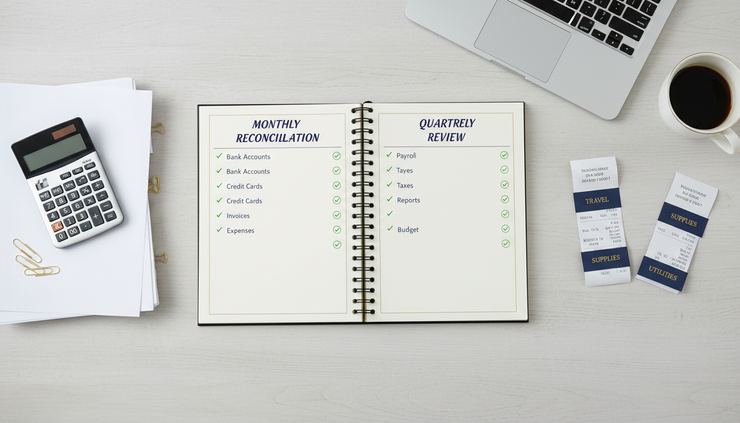
Clean books protect more than tax records
Clean books protect more than tax records—they support better business decisions. Delayed bookkeeping cleanup costs more than a few extra hours. It affects cash flow, taxes, planning, and the confidence to make informed decisions.
The sooner cleanup begins, the less there is to untangle. More importantly, current financial records give business owners a clear picture of where the business stands today—not where it stood several months ago.
The real value of clean books isn't just organized records. It's having the confidence to make your next business decision with accurate financial information.